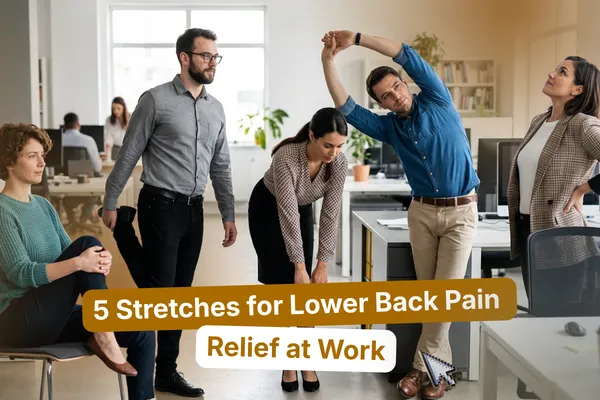
5 Stretches for Lower Back Pain Relief at Work
Chiropractic Care, Lower Back Pain Stretches, Youngstown & Poland OH
If you’re searching for lower back pain stretches you can actually do at your desk, you’re probably tired of hurting every time you stand up from your chair. By the end of this guide, you’ll know five simple stretches you can use at work, how to do them safely, and when it might be time to let a chiropractor like Dr. Thomas Szalay in Youngstown and Poland, OH, take a closer look at what’s really going on with your spine.

Why Your Lower Back Hurts So Much at Work
Let’s be honest for a second. Sitting at a desk all day doesn’t sound dangerous, but your lower back may completely disagree. You might feel stiff when you stand up, get a sharp pinch when you twist to grab something, or notice a dull ache that gets worse as the day goes on. It’s frustrating, and it can make even a simple workday feel exhausting.
Many people we see at Szalay Chiropractic in the Mahoning Valley tell us the same story: “I thought it was just normal work pain,” or, “I figured it would go away on its own.” Sometimes it does, but often it doesn’t. Long hours of sitting, poor posture, stress, and weak core and hip muscles can all pile up on your lower back. Over time, that pressure can irritate the joints, discs, and muscles that support your spine, and your body lets you know with pain and stiffness.
⚠️ Warning: If you have severe pain, pain that shoots down your leg, numbness, weakness, or trouble controlling your bladder or bowels, skip the stretches and seek medical care right away. Those can be signs of a more serious problem that needs prompt attention.
The good news? Gentle, targeted stretches for lower back pain at work can take some of that pressure off, improve your mobility, and help your muscles relax. They’re not a magic cure, but they are a powerful tool you can use throughout your day to feel and move better, especially when paired with proper chiropractic care for lower back pain when it’s needed.
Before You Start: How to Stretch Your Lower Back Safely at Your Desk
Before we walk through the five stretches, let’s quickly talk about how to keep things safe. You don’t need to be “flexible” or athletic to do these. You just need to listen to your body and move gently. Think “comfortable stretch,” not “how far can I push this?” You should feel a mild pulling or opening sensation, not sharp pain, burning, or tingling down the leg.
Move slowly into and out of each stretch. No bouncing or jerking.
Breathe. Holding your breath makes muscles tighter, not looser.
Aim for 15–30 seconds per stretch, 2–3 times on each side when it applies.
Stop if you feel sharp, shooting, or worsening pain, and talk with a provider before trying again.
💡 Pro Tip: Set a reminder on your phone or computer every 60–90 minutes. Even a quick 2-minute stretch break can make a big difference by the end of the day.
Stretch #1: Seated Pelvic Tilt – Reset Your Spine While You Work
This first move is one of the simplest office stretches for back pain, and you can do it without anyone even noticing. It helps wake up the small muscles that support your lower back and teaches your spine to move instead of locking into one slumped position all day long.
Sit tall near the front of your chair with both feet flat on the floor, hip-width apart. Let your hands rest on your thighs.
Slowly roll your hips forward so your low back gently arches, like you’re sticking your tailbone back. Don’t force it; just a mild arch is enough.
Then roll your hips the opposite way, tucking your tailbone under and gently rounding your lower back, like you’re curling into a small “C” shape.
Move back and forth between these two positions 10–15 times, breathing slowly and smoothly.
You’re basically giving your spine a mini “reset.” This gentle motion helps circulate fluid around the joints and discs, which can ease stiffness. It’s one of the easiest lower back pain stretches to sprinkle into your day whenever your back starts to feel locked up.
Stretch #2: Seated Figure-Four – Release Tight Hips That Pull on Your Back
A lot of lower back pain actually starts in the hips and glutes. When those muscles get tight from sitting, they tug on your pelvis and change the way your lower back has to work. The seated figure-four stretch is a great way to open things up without leaving your chair, making it perfect as one of your go-to stretches for lower back pain at work.
Sit tall with both feet flat on the floor. Slowly cross your right ankle over your left knee, letting your right knee gently drop out to the side. If this is too much, slide the ankle closer to your shin instead of the knee.
Keep your back straight and gently hinge forward from your hips until you feel a stretch in your right hip and glute. Avoid rounding your back to get “more” stretch.
Hold for 20–30 seconds, breathing deeply. Then switch sides and repeat.

Opening tight hips can take hidden pressure off your lower back during long workdays.
If this stretch feels very intense, back off a little and shorten the hold time. Over time, as your hips loosen, you’ll likely notice that standing up and walking after sitting feels a lot smoother and less painful.
Stretch #3: Seated Side Bend – Ease Tension Along the Sides of Your Spine
When we talk about desk stretches for back pain, we often think front-to-back, but the muscles along the sides of your spine work hard too. If you’re always leaning to one side to reach your mouse, phone, or paperwork, those side muscles can get overworked and cranky. A simple seated side bend can help lengthen them and give your lower back some breathing room.
Sit with your feet flat and your sit bones grounded in the chair. Place your left hand on the seat or armrest for support.
Reach your right arm up toward the ceiling, then gently lean your upper body to the left, like you’re making a soft arc with your spine. Keep both hips anchored on the chair.
You should feel a stretch along the right side of your waist and lower back. Hold for 20–30 seconds, then switch sides.
This stretch is especially helpful if you notice one-sided pain or if you tend to slump toward one armrest. It’s also a nice way to counteract the “shrugged shoulders and rounded back” posture many of us fall into while we’re focused on a screen.
Stretch #4: Standing Hip Flexor Stretch – Undo the Damage from Too Much Sitting
If you can step away from your desk for a minute, this one is worth it. Your hip flexors are the muscles at the front of your hips that shorten when you sit. When they stay tight for hours, they can tilt your pelvis forward and force your lower back to work overtime. The standing hip flexor stretch helps open the front of the hips and can relieve some of that pull on your spine, making it one of the most important stretches for lower back pain at work.
Stand beside your desk or a wall for balance. Step your right foot back like you’re taking a small step into a lunge, with your left knee slightly bent and feet hip-width apart.
Gently tuck your tailbone under and squeeze your right glute (buttock) muscle. You should feel a stretch at the front of your right hip and thigh, not in your lower back.
Keep your upper body tall, and avoid leaning forward. Hold for 20–30 seconds, then switch sides.
💡 Pro Tip: If your balance feels unsteady, lightly rest one hand on your desk or the wall. This stretch should feel stable and controlled, not like a balancing act.
When your hip flexors loosen up, many people notice their posture improves automatically. Standing feels easier, walking feels smoother, and your lower back doesn’t have to fight so hard to keep you upright.
Stretch #5: Supported Forward Fold – Gentle Decompression for a Tired Spine
After hours of sitting, your spine can feel like it’s carrying the weight of the world. A supported forward fold is a simple way to give your lower back a gentle “unloading” moment. It’s not the same as formal spinal decompression therapy, but it can give you a small taste of that relief during the workday.
Stand behind your chair with your feet hip-width apart. Place both hands on the back of the chair, keeping your arms straight but not locked. Make sure the chair is stable and won’t roll away.
Step back and gently hinge at your hips, lowering your chest toward the floor until your body forms an “L” shape. Your ears should be roughly in line with your upper arms, and your knees can stay slightly bent.
Let your head relax between your arms and feel a stretch along your back, shoulders, and the backs of your legs. Hold for 20–30 seconds, breathing slowly.
As you come out of the stretch, walk your feet toward the chair and stand up slowly to avoid getting lightheaded. Many patients tell us this one quickly becomes their favorite “reset” stretch during long afternoons at the office.
Will These Lower Back Pain Stretches Fix the Problem?
This is an important question, and I want to answer it honestly. These five office stretches for back pain can absolutely help you feel better. They can reduce stiffness, improve blood flow, and take some pressure off irritated muscles and joints. For many people, especially if the pain is mild and recent, that’s enough to turn things around when combined with better posture and more movement breaks.
But if your pain has been hanging around for weeks or months, keeps coming back, or is getting worse, stretches alone probably won’t solve the whole problem. That doesn’t mean you’re broken or doomed to “just live with it.” It simply means there may be an underlying issue with your spine, joints, discs, or nerves that needs a closer look and a more personalized plan, like chiropractic care for lower back pain, specific rehab exercises, or other therapies we offer at Szalay Chiropractic.
Common Myths About Lower Back Pain and Stretching
When patients in Youngstown or Poland, OH, come in asking how to relieve lower back pain, they’ve usually heard a lot of mixed messages. Let’s clear up a few myths so you can make decisions based on facts, not fear or guesswork.
Myth #1: “If it hurts, I should stretch it harder.”
Pain is your body’s way of asking for attention, not punishment. Forcing a stretch into sharp pain can actually irritate the tissues more and trigger muscle guarding, which makes you even tighter. Aim for a gentle, comfortable stretch instead. If a certain movement always makes your pain worse, that’s a sign to get evaluated rather than keep pushing through it.
Myth #2: “If I stretch, I don’t need chiropractic care.”
Stretches are a great self-care tool, but they don’t replace a full assessment when something deeper is going on. If your spine is misaligned, a joint is stuck, or a disc is irritated, stretching might give temporary relief without addressing the root cause. In our office, we often combine gentle adjustments, targeted rehab, and stretches like the ones in this article to help your body move and heal in a more balanced way over time.
Myth #3: “If my X-ray or MRI looks ‘okay,’ the pain must be in my head.”
Pain is real, even when imaging doesn’t show a dramatic problem. The National Institute of Neurological Disorders and Stroke notes that many people with back pain have no clear cause on imaging, and many people with “abnormal” imaging have no pain at all. That’s why a hands-on exam, your story, and how your body moves are just as important as any picture when we’re figuring out how to help you.
Myth #4: “Resting and avoiding movement is the safest option.”
In most cases of non-serious lower back pain, staying gently active is better than complete rest. The Cleveland Clinic explains that light movement and stretching can help reduce stiffness and support recovery for many types of back pain. That doesn’t mean you should power through severe pain or ignore red-flag symptoms, but it does mean your body usually benefits from smart, gentle motion instead of days of bed rest.
How Chiropractic Care Fits In With Your Workday Stretch Routine
Think of these five lower back pain stretches as your “daily maintenance.” They help keep things moving and reduce tension while you work. Chiropractic care is more like a full tune-up and alignment for your spine and nervous system. At Szalay Chiropractic, a typical visit for lower back pain starts with a conversation about your symptoms, your workday, and your goals, followed by a hands-on exam to see how your spine and muscles are actually moving.
If chiropractic adjustments are appropriate for you, they’re usually gentle, quick movements to specific joints in your spine or pelvis that aren’t moving the way they should. You might feel a light pressure or hear a small “pop,” but most people describe it as a relief, not something scary. We may also recommend specific exercises, lifestyle changes, or, when needed, other therapies like spinal decompression to reduce pressure on irritated discs. Over time, the goal is not just to calm the current flare-up, but to help your body move in a way that makes future flare-ups less likely.
⚠️ Note: Every spine is different. Not everyone is a candidate for every type of chiropractic treatment. That’s why a one-on-one evaluation is so important before starting care.
Building a Workday Routine That Supports Your Lower Back
Stretches are powerful, but they’re even more effective when they’re part of a bigger plan to protect your back during the workday. Here are a few simple habits we often walk through with patients in Youngstown, Poland, and across the Mahoning Valley who are struggling with desk-related back pain:
Check your chair and desk height. Your feet should rest flat on the floor, your knees about level with your hips, and your screen roughly at eye level. If you’re constantly leaning forward or looking down, your back will let you know.
Use the 30–60 minute rule. Every 30–60 minutes, stand up, walk for a minute, or do one or two of the stretches from this article. It doesn’t have to be long; it just has to be consistent.
Alternate tasks when you can. If your job allows it, rotate between sitting tasks, standing tasks, and walking tasks so your body isn’t stuck in one position all day.
Pay attention to your stress level. When we’re stressed, we tend to clench our muscles, hold our breath, and slump. Simple breathing exercises, short walks, or even a quick stretch break can help your nervous system calm down, which often helps your back too.
Over time, these small changes add up. They support the work we do in the office and give your spine a much better environment to stay healthy between visits.
Questions Patients Ask About 5 Stretches to Relieve Lower Back Pain at Work
How often should I do lower back pain stretches during the workday?
Most people do well stretching every 60–90 minutes during the workday. You don’t need a long routine; even 2–3 minutes of gentle movement can help reduce stiffness and discomfort. If your back is already irritated, shorter but more frequent stretch breaks often feel better than one long session at the end of the day. If stretching seems to make your pain worse, it’s time to get evaluated by a professional.
Can these office stretches for back pain replace seeing a chiropractor?
Stretches are a great first step and can be enough for mild, short-term soreness. However, if your lower back pain is persistent, severe, or keeps coming back, stretches alone usually are not enough to address the root cause. A chiropractor can evaluate your spine, joints, and muscles, then create a personalized plan that may include adjustments, rehab exercises, and lifestyle changes alongside your stretching routine. Together, these often provide more lasting relief than stretching alone.
Is it safe to do desk stretches for back pain if I have a herniated disc?
It can be, but you should be careful and get guidance first. Some stretches are helpful for herniated discs, while others can increase pressure on the disc and make symptoms worse, especially if you have leg pain, numbness, or weakness. If you’ve been told you have a herniated disc, it’s best to work with a provider like Dr. Szalay who can show you which stretches are safe for your specific situation and which ones to avoid for now.
How long will it take for these stretches to relieve my lower back pain?
Some people feel a bit of relief right away, especially from tight muscles or stiffness. For others, it may take a few days or weeks of consistent stretching and movement breaks to notice a clear difference. If you’ve been stretching regularly for a couple of weeks and your pain is not improving or it’s getting worse that’s a sign to get a professional evaluation instead of just adding more stretches.
What’s the best way to relieve lower back pain at work if I can’t leave my desk?
If you’re stuck at your desk, focus on the seated stretches: pelvic tilts, seated figure-four, and seated side bends. Adjust your posture, scoot to the edge of your chair, and plant your feet flat on the floor. Even rolling your shoulders, gently turning your head, and taking a few deep breaths can help your whole body relax. When you’re able, adding standing stretches and short walks will usually give your lower back even more relief.
A Quick Reality Check and Next Step for Your Lower Back
Medical Disclaimer: This article is for informational purposes only and is not a substitute for professional medical advice, diagnosis, or treatment. Always talk with Dr. Szalay or another qualified healthcare provider about your specific symptoms and before starting or changing any exercise or treatment plan.
Lower back pain is common, but that doesn’t mean it’s “normal” or something you just have to accept as part of your job. The five lower back pain stretches we walked through are a simple, practical way to start taking care of your spine right where you are at your desk, in your office, or wherever you work in the Youngstown, Poland, or greater Mahoning Valley area. They’re a great first step toward feeling better and taking some control back from your pain.
If lower back pain is affecting your workday, the team at Szalay Chiropractic can identify the root cause and create a personalized treatment plan to help you move comfortably and stay pain-free as you go about your life. To see what’s really driving your pain and whether chiropractic care could be a good fit for you, schedule a new patient appointment online at this link, and let’s take the next step together toward a calmer, stronger back.
